
A Rust safe zone changes the rules in a particular place. It does not make the road to that place safe, erase hostile status on arrival or protect the goods after you leave. A useful trading plan therefore has three parts: reaching the monument in an acceptable state, using its services and getting the result somewhere useful.
This distinction matters most when a player has just been fighting or is carrying the resources for an important purchase. The monument's familiar name can create a false sense of completion. The game still evaluates the character's status, position and behavior, while other players can influence the journey outside.
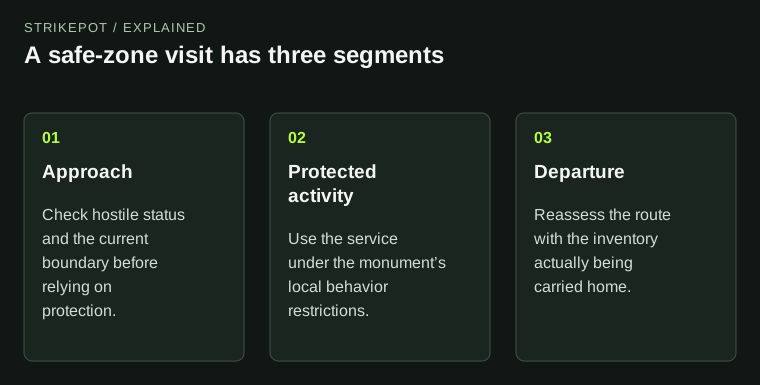
Local protection covers the visit, while the two journeys remain separate decisions.
Protection has a location and a condition
The Facepunch-hosted map documentation separates safe-zone monuments from ordinary monuments. It explains that player-damage protection applies within the safe zone and that hostile behavior can draw a response from its NPCs and turrets. A monument providing useful services does not establish that every nearby location is protected.
Do not infer the exact boundary from where a road turns, where another player is standing or where the buildings begin. Read the game's current indicators as you approach. If the purpose is to trade peacefully, reaching the actual protected area in a non-hostile state is part of the task.
A helpful thought experiment is to draw the trip with the monument as one segment. Home to monument is a journey through the server. Time at the monument follows its local restrictions. Monument to home is another journey. The fact that the middle segment is protected tells you little about who is waiting on either side.
Recent behavior can follow you to the entrance
Facepunch's safe-zone changes documented in July 2020 included restrictions on drawing weapons and protection for non-hostile players. The same explanation points to a hostile-status icon and a remaining-time display in the inventory. Those indicators are better evidence than a remembered estimate of when the last fight ended.
For a hypothetical example, two teammates finish a fight and decide to purchase supplies. One assumes the travel time was long enough to clear the relevant status. The other checks the displayed condition before approaching. The second player has made a smaller, more reliable decision: verify the state the game is showing rather than guess from the length of the walk.
Do not make an expensive inventory the test of an uncertain boundary or timer. Pause the trip while the condition is unresolved and read the current display. Server-specific changes can affect the experience, so an old video of another map or configuration is a weak substitute for what the present session reports.
Prepare a trade that can actually finish
Before leaving home, decide what service you need and what the exchange requires. Carrying extra material can be sensible for a planned purchase, but unrelated valuables increase what is at stake on the unprotected portions of the route. A clear target also reduces time spent reorganizing an inventory at the destination.
Distinguish the things obtained there from account possessions. A resource purchase or equipment trade produces an object in the current world. It does not create a new cosmetic entitlement. The Rust skin ownership guide explains the Steam channels when that is the actual question.
If the intended service is unavailable, identify that service's own condition. A vendor's offer, a delivery terminal and the safe-zone defenses do different jobs. Being protected from player damage does not guarantee a particular shop is stocked or a remote service is currently operational. Decide whether to wait or revise the plan using the visible state.
The return trip often carries a different risk
Arriving with payment and leaving with a purchased item are not equivalent inventories. The outgoing resources may be easy for the group to replace, while the purchased component may be the one thing the base needs next. Plan the return around the actual result rather than copying the route automatically.
This does not require a universal best path. Terrain, current activity, distance and the group's available transport all matter. The useful habit is to reassess before leaving the protected area. Check the destination, who is traveling with you, and what happens if the carrier cannot get home.
For a small group, divide responsibility clearly. One member can carry the purchased item while another communicates the route and the regroup point. They should still understand where protection ends. A teammate's presence is coordination, not an extension of the monument's rules.
Logging out is a separate decision
A place designed for trading should not be treated as an assumed long-term storage plan for a character and inventory. Do not infer permanent safety from a successful short visit. Check the current server rules before choosing where to leave a session, especially when relying on any special treatment of sleepers.
This article does not assign a universal sleeper timeout or hostile duration. Those precise values are unnecessary to the central decision: finish the service, collect the goods and choose a deliberate place to end the journey. A memorized old number can obscure the more important question of what state the character and inventory will be left in.
Describe an unexpected loss with evidence
If an encounter goes wrong, record the server, location, visible status and sequence of actions. The combat-log guide can help interpret recorded damage, but a damage line alone does not establish every boundary or action that preceded it. Keep the account of events specific.
Safe zones make useful activities possible under local restrictions. Treating them as one protected segment of a wider trip gives those restrictions their proper role: a place to trade, with an arrival state and a departure plan still to manage.